November 30, 2025
Paint matching is a foundational aspect of any auto body collision shop repair, requiring a blend of technical knowledge, artistic skill, and precision. Every vehicle comes with a manufacturer-assigned color code, which serves as the starting point for replicating the original paint. While these codes provide a framework, achieving a perfect match involves much more than following numbers. Variations in material, wear, and exposure mean that technicians must interpret color codes with a trained eye and adjust formulations accordingly.
Technicians rely on both traditional and modern tools to ensure accuracy. Spectrophotometers measure the wavelengths of light reflected off a surface to determine subtle differences in hue, while swatches and visual inspection allow for fine-tuning. Color theory plays an essential role, guiding professionals to predict how colors appear under different lighting and ensuring they compensate for metamerism, a phenomenon where shades look different depending on the light source.
Experience is critical, as seasoned technicians understand how to blend base colors with slight adjustments to achieve a seamless match, even when dealing with weathered or faded paint. According to the AAA, over 35% of drivers neglect regular maintenance, which can exacerbate paint fading and environmental damage, highlighting the importance of expert intervention.
Challenges in paint matching include fading, oxidation, and surface inconsistencies. Exposure to sunlight, pollution, and other environmental factors can subtly alter a vehicle's color over time, making a straightforward color replication impossible. This is why the expertise of a skilled auto body collision shop is indispensable. Their work goes beyond simple replication—it involves analyzing the vehicle, understanding its history, and making precise adjustments to achieve a virtually undetectable repair.
Blending Techniques and Achieving Seamless Finishes
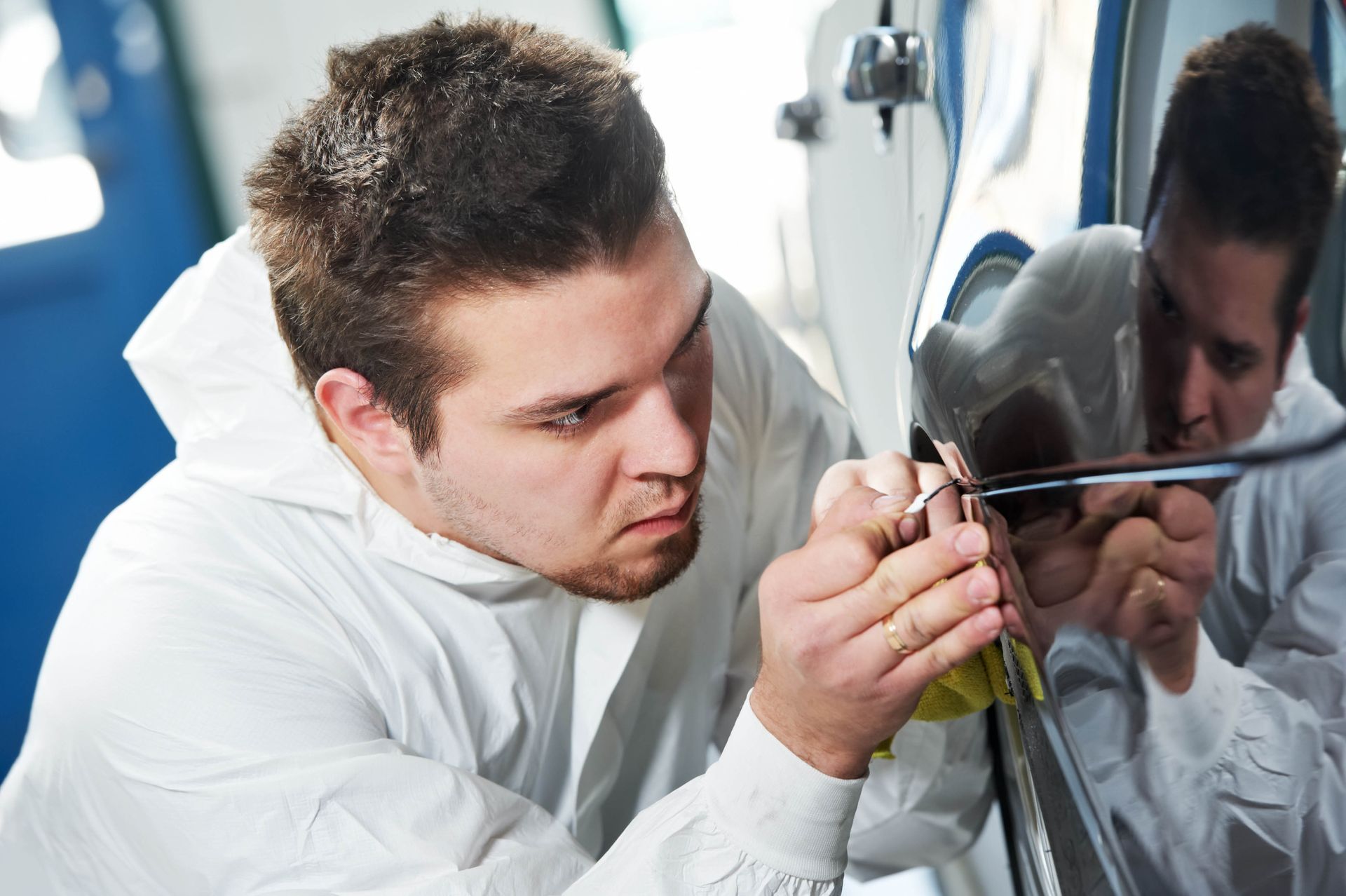
Even when a color match is precise, a visible transition between old and new paint can reveal a repair. That's why blending is essential in auto body collision shops. Blending involves feathering the new paint into the existing finish, smoothing both color and texture so that the repair integrates seamlessly with the vehicle. Without proper blending, even minor repairs can appear obvious and detract from the overall appearance.
The blending process begins with careful surface preparation, including thorough cleaning to remove contaminants and ensure adhesion. Technicians then apply the paint in thin layers, gradually extending it into the surrounding area. Sanding and buffing correct minor texture variations, while multiple layers of clear coat enhance durability and create a uniform gloss. The clear coat also plays a vital role in reflecting light consistently across the vehicle, making the transition imperceptible.
Texture is just as important as color. Differences in spray technique, pressure, and layer thickness can produce inconsistencies, so technicians adjust these factors to replicate the vehicle's original finish. Wet sanding and careful polishing help minimize texture differences, ensuring that a repaired panel feels and looks like it belongs with the rest of the car. Quality control is maintained throughout the process, with technicians inspecting the vehicle under controlled lighting to catch even minor discrepancies. This attention to detail is what separates a standard repair from the flawless results offered by top auto body collision shops.
Incorporating Technology for Precision and Efficiency
Technology has transformed the auto body collision repair process, making color matching and blending more precise than ever. Digital color matching systems can scan a vehicle's surface and provide exact paint formulations, reducing guesswork and improving accuracy. Automated mixing machines ensure that these formulations are consistently replicated, eliminating human error and producing uniform paint quality across multiple repairs.
Three-dimensional visualization tools allow technicians to preview the final color and how it interacts with different angles and lighting conditions, which helps minimize mistakes before any paint is applied. Artificial intelligence further enhances these capabilities by predicting how paint will age and how fading might affect color match over time. By combining these advanced tools with hands-on expertise, auto body collision shops can deliver repairs that are both visually flawless and long-lasting.
Technological integration also improves efficiency. By automating calculations and preparation tasks, technicians can dedicate more focus to application and blending, completing repairs faster without compromising quality. The combination of skilled professionals and advanced technology ensures that clients receive high-quality results while keeping the repair process as streamlined as possible. Tools like digital color matching systems, automated mixing machines, and AI-driven predictive software allow technicians to achieve precise paint formulations and anticipate how colors will age over time, resulting in repairs that are both visually flawless and long-lasting.
Managing Environmental and Maintenance Challenges
Environmental factors play a significant role in paint matching and blending. Temperature, humidity, and UV exposure all affect how paint dries, how colors appear, and how long the repair lasts. UV-resistant coatings, controlled indoor workspaces, and adjustments to spray technique allow auto body collision shops to counteract these factors and maintain consistent results. Pollution, dust, and contaminants can also alter paint texture and color, making careful surface preparation and controlled paint storage essential.
Climate considerations extend beyond the repair facility. Auto body collision shops often adjust their techniques based on local weather conditions to prevent issues such as bubbling, cracking, or uneven drying. Proper paint storage, including maintaining correct temperatures and humidity levels, ensures that the paint remains stable and produces consistent results. These preventive measures protect the integrity of the repair and allow technicians to deliver high-quality work regardless of environmental conditions.
Neglected maintenance can worsen these challenges. Vehicles with accumulated damage from environmental exposure often require more extensive preparation and blending. By emphasizing the importance of regular upkeep to clients, technicians help prevent minor issues from escalating into more costly repairs, further underscoring the value of professional auto body services. Regular maintenance not only preserves a vehicle's appearance but also helps technicians achieve more precise and long-lasting paint matching and blending results.
Training, Certification, and Customer Communication
The skill of technicians is a key factor in the success of any auto body collision shop. Continuous education and hands-on training keep technicians up to date with the latest materials, techniques, and technological innovations. Workshops, seminars, and online learning platforms provide both practical and theoretical knowledge, enabling technicians to refine their craft and adapt to evolving industry standards. Certification programs further validate expertise, giving clients confidence in the quality and professionalism of the shop's services.
Equally important is customer communication. Educating clients about the complexity of paint matching and blending helps set realistic expectations and fosters trust. Clear explanations about timelines, potential limitations, and the importance of routine maintenance ensure that customers understand the value of skilled repairs. Feedback mechanisms allow shops to learn from client experiences, continuously improving processes and maintaining high levels of satisfaction. Building long-term relationships through consistent quality and transparent communication is critical to sustaining a strong reputation in the industry.
Showcasing successful repair outcomes, through case studies or testimonials, also reinforces credibility. Highlighting the precision, care, and technology involved in repairs demonstrates the auto body collision shop's commitment to excellence and reassures potential clients of the quality of service they can expect.
Paint matching and blending are intricate, highly skilled processes that require a combination of expertise, technology, and attention to detail. Auto body collision shops face challenges such as color variation, faded or weathered paint, and environmental impacts, but skilled technicians, advanced tools, and quality control measures ensure seamless results. Schedule your repair with Jeff's Northshore Auto today and experience precision, care, and flawless results you can trust.